
New research has revealed that molecular point-of-care testing (POCT) can significantly improve detection of Group A Streptococcal (Strep A) pharyngitis compared to laboratory culture – particularly in remote communities, where results can take up to seven days – unlocking a major opportunity to prevent rheumatic fever by identifying infections early that may otherwise go untreated.
The study, led by the Wesfarmers Centre of Vaccines and Infectious Diseases (WCVID) based at The Kids Research Institute Australia, found that rapid molecular testing identified substantially more Strep A infections than traditional diagnostic pathways, which rely on symptom-based presentation and laboratory culture.
Published in CMI Communications, the research highlights a critical gap in current models of care – particularly in remote and resource-limited settings – where limited clinical access or delays in laboratory testing can result in missed or untreated infections.
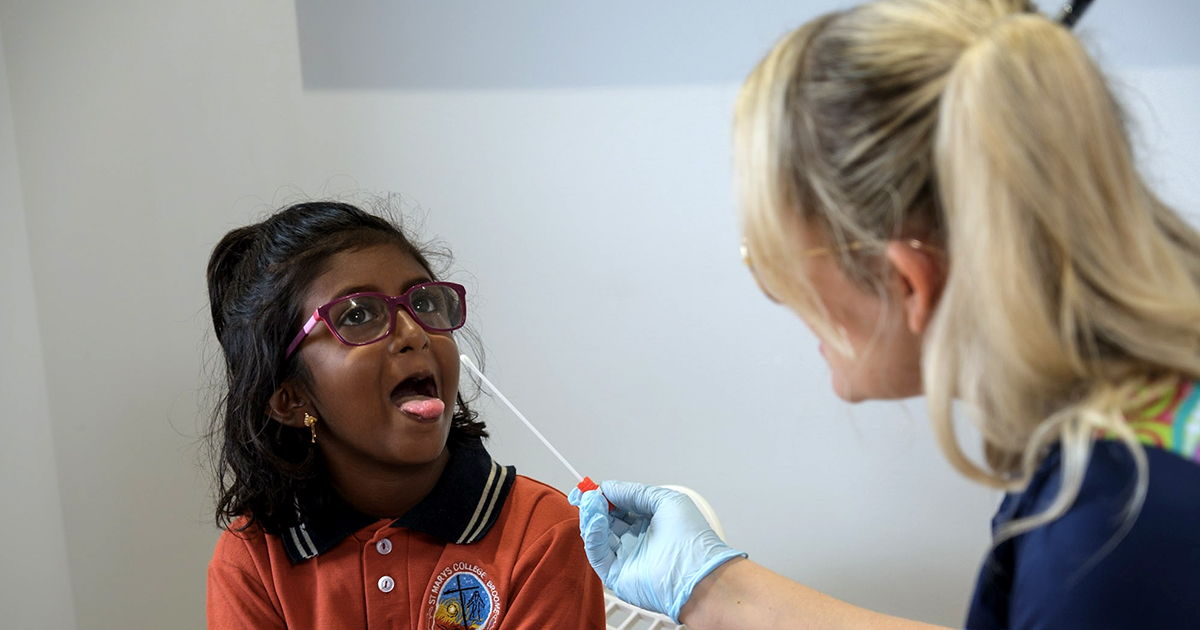
To better understand how Strep A spreads and persists, researchers conducted repeated throat swabs in school-aged children in Western Australia’s Kimberley region, using both culture and rapid molecular point-of-care testing to detect infections regardless of symptoms and track changes over time.
The findings revealed a highly dynamic pattern of infection, with children frequently moving between positive and negative results. Crucially, many infections detected through POCT would likely have been missed under standard clinical approaches as the children had low grade symptoms and were at school. Relying on the patient to attend the clinic for assessment and report a sore throat without a checklist and rapid testing will miss these opportunities for prevention.
A substantial proportion of Strep A infections were found in children who did not report a sore throat, reinforcing that symptom-based diagnosis alone cannot capture the true burden of disease or interrupt transmission.
Professor Asha Bowen, Head of WCVID’s Healthy Skin and Acute Rheumatic Fever Prevention team, said the study provides one of the clearest pictures yet of how Strep A behaves in children at high risk of rheumatic fever.
“Our study aimed to find out some of the missing pieces of information that doctors need to prevent rheumatic fever,” Professor Bowen said.
“We found that rapid Strep A tests worked well in schools, and that Strep A detection in throats is common in school aged children. We were surprised to find out how many children were at school and not at the clinic with a Strep A sore throat.
“Their symptoms were not bad enough to bother them but could place them at silent risk of rheumatic fever, which can progress to rheumatic heart disease (RHD), a devastating condition we are working to prevent.”
The findings form part of the Missing Piece Surveillance Study, which revealed that one in six children in the Kimberley had Strep A detected in their throat at any given time, with more than half experiencing no noticeable symptoms.
Together, the results strengthen the case for global implementation of Strep A POCT as a key strategy for prevention of rheumatic fever and its complications, particularly in high-burden settings and where access to laboratory testing is limited.
The study also highlighted the value of working in partnership with regional and remote communities, schools and Aboriginal community controlled health organisations to deliver testing in ways that are accessible, culturally responsive and centred around families. By bringing screening into school settings, the approach supported earlier identification of infections and complemented existing care, helping families access timely support beyond traditional clinic-based, symptom-driven pathways.
Building on these findings, researchers are now evaluating how this approach can be scaled in clinical settings through the START Strep A project, across Western Australia, the Northern Territory, South Australia and Queensland.
“To our knowledge, this is the first time in the world that Strep A rapid molecular tests have been used in school children at high risk of rheumatic fever. It demonstrates another way forward to prevent rheumatic fever,” Professor Bowen said.
Read the full study, The value of molecular point-of-care testing for Group A Streptococcal pharyngitis in a remote, non-clinical Australian setting.
First published Tuesday 2 June 2026.
View all news articles