
Search
Sepsis, for children and their parents, is a life-altering illness with far-reaching psychosocial and physical impacts. We aimed to explore the needs of such patients and their parents after hospital admission for sepsis to inform the development of a Western Australian postsepsis care service.
Our skin, the body’s largest organ, protects us and maintains overall health. Untreated recurring skin infections like impetigo and scabies severely impact children. The Kids is at the forefront of combatting skin infections, particularly within remote Aboriginal communities experiencing some of the world’s highest rates.
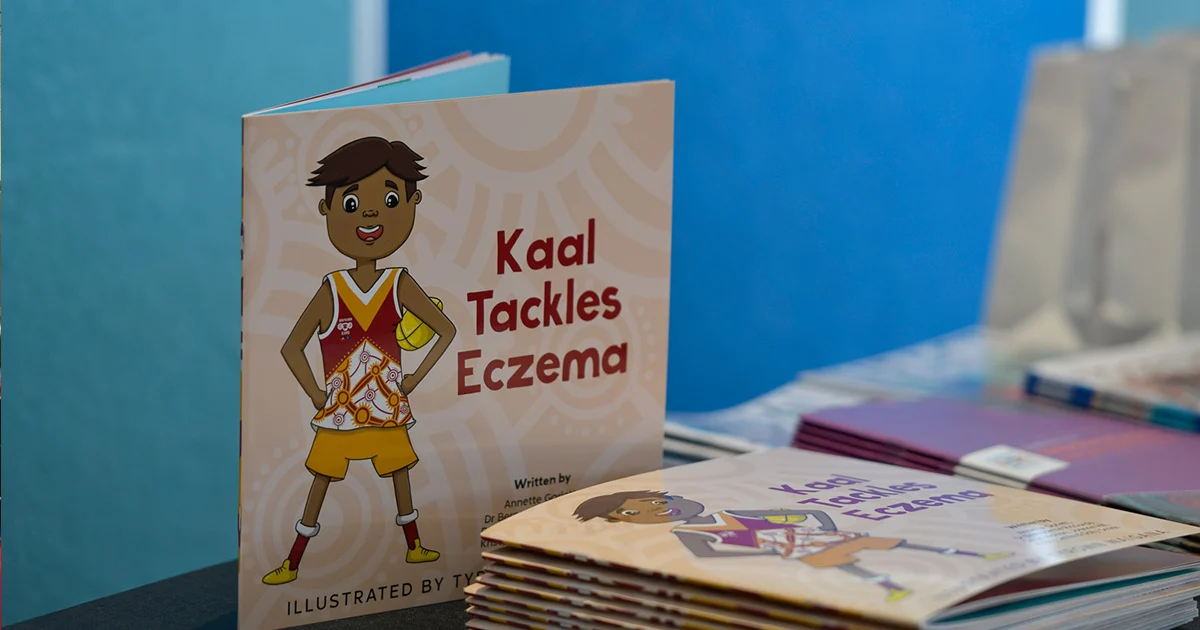
In close partnership with Aboriginal Elders and community members in Western Australia's south-west, we created ‘Kaal Tackles Eczema’, a children’s book to help Aboriginal families manage eczema. Our research showed a high prevalence and need for culturally relevant resources. The book uses Noongar language and art to educate and reduce infections, and is available online and in schools.
Impetigo is a highly contagious bacterial infection of the superficial layer of skin. Impetigo is caused by group A Streptococcus (Strep A) and Staphylococcus aureus, alone or in combination, with the former predominating in many tropical climates. Strep A impetigo occurs mainly in early childhood, and the burden varies worldwide. It is an acute, self-limited disease, but many children experience frequent recurrences that make it a chronic illness in some endemic settings.
Bacterial skin infections and scabies disproportionately affect children in resource-poor countries as well as underprivileged children in high-income countries. Atopic dermatitis is a common childhood dermatosis that predisposes to bacterial skin infection.
Jonathan Asha Dylan Rosemary Janessa Jeffrey Carapetis AM Bowen Barth Wyber Pickering Cannon AM MBBS FRACP FAFPHM PhD FAHMS BA MBBS DCH FRACP PhD
Group A β-haemolytic Streptococcus (GAS), a Gram-positive bacterium, causes skin, mucosal and systemic infections. Repeated GAS infections can lead to autoimmune diseases acute rheumatic fever (ARF) and rheumatic heart disease (RHD). Aboriginal and Torres Strait Islander peoples in Australia have the highest rates of ARF and RHD in the world.
Staphylococcus aureus is a common cause of bacteremia, yet the epidemiology and predictors of poor outcome remain inadequately defined in childhood. ISAIAH (Invasive Staphylococcus aureus Infections and Hospitalizations in children) is a prospective, cross-sectional study of S. aureus bacteremia in children hospitalized in Australia and New Zealand over 24 months.
Debbie Susan Palmer Prescott BSc BND PhD MBBS BMedSci PhD FRACP Head, Nutrition in Early Life Honorary Research Fellow debbie.palmer@uwa.edu.au
Invasive aspergillosis (IA) in haematology/oncology patients presents as primary infection or breakthrough infection, which can become refractory to antifungal treatment and has a high associated mortality. Other emerging patient risk groups include patients in the intensive care setting with severe respiratory viral infections, including COVID-19.