Skip to content

Search

Beating the bugs: a new resource helping to keep skin healthy

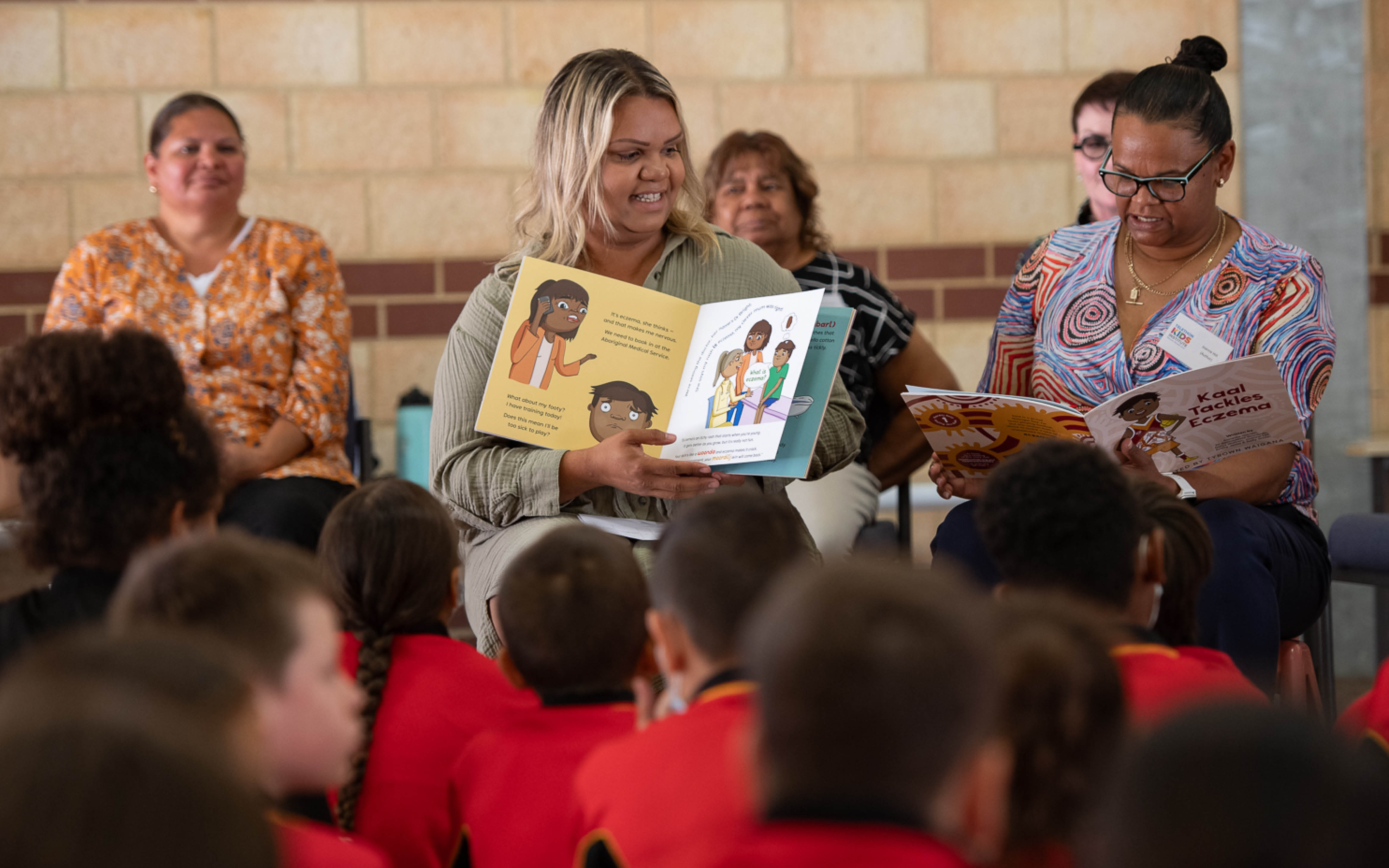
A year after launching the first National Healthy Skin Guideline to address record rates of skin infections in Australia’s Indigenous communities, The Kids Research Institute Australia has released a new resource as part of the guideline.

CASSETTE: Clindamycin Adjunctive therapy for Severe Staphylococcus aurEus Treatment Evaluation, a multi-centre, pilot randomised controlled trial

Asha Tom Bowen Snelling BA MBBS DCH FRACP PhD GAICD FAHMS OAM BMBS DTMH GDipClinEpid PhD FRACP Head, Healthy Skin and ARF Prevention Head, Infectious

Development of methods to rapidly track pathogen and antibiotic resistance profiles from skin sores in Northern Australia (Hot North)

Indigenous Australian children suffer the highest rates of impetigo (skin sores) in the world, which can result in serious immune complications including chronic kidney and possibly rheumatic heart disease.

Honey as a potential topical treatment for skin infections: a literature review

The role of honey for the treatment of skin infections and wound healing has primarily come from personal stories of its effectiveness however these personalised studies have not been researched in the Kimberley region.

Immuno-nephelometric determination of group streptococcal anti-streptolysin O titres (ASOT) from dried blood spots: Method for validating a new assay

This study was designed to determine the sensitivity and reproducibility of recovering anti-streptolysin O titres (ASOT) from dried blood spot (DBS) samples.

National Antimicrobial Surveillance Academy for Indigenous Health Care Providers

Asha Bowen BA MBBS DCH FRACP PhD GAICD FAHMS OAM Head, Healthy Skin and ARF Prevention Head, Healthy Skin and ARF Prevention Areas of expertise: Skin

Ngangk Ngabala Ngoonda (Sun Safety)

The ‘Ngangk Ngabala Ngoonda (Sun Safety) of Aboriginal young mob of WA’ is a community-led project that aims to identify the sun safety needs and strengthen sun safety knowledge of Aboriginal Children and Young People in Western Australia.

Australian Group on Antimicrobial Research surveillance outcome programs - bloodstream infections and antimicrobial resistance patterns from patients less than 18 years of age

From 1 January 2020 to 31 December 2021, thirty-eight institutions across Australia submitted data to the Australian Group on Antimicrobial Resistance (AGAR) from patients aged < 18 years (AGAR-Kids). Over the two years, 1,679 isolates were reported from 1,611 patients. This AGAR-Kids report aims to describe the population of children and adolescents with bacteraemia reported to AGAR and the proportion of resistant isolates.

Major grant empowers community voices to drive reduction in skin infections

Aboriginal community members throughout the Kimberley will take a lead role in driving healthy skin messages within their own communities thanks to a major funding boost to The Kids Research Institute Australia’s SToP Trial.