
Search
Although up to 89% of autistic children experience feeding difficulties, little is known about the impact of these difficulties on mealtime participation. The aim of this study was to explore the impact of feeding difficulties on the mealtime participation of autistic children and their families based on caregiver experiences.
Parenting is a rewarding experience but is not without its challenges. Parents of Autistic children face additional challenges, and as a result can experience lower levels of wellbeing and more mental health problems (i.e., depression, anxiety, stress). Previous studies have identified concurrent correlates of wellbeing and mental health.
This article describes the development of a Model of Care resource to support youth involved with the justice system where a neurodevelopmental disability such as Fetal Alcohol Spectrum Disorder is suspected. Service staff within the Youth Justice sector were engaged in an iterative process of resource development over a 9-month period.
Professional supports play an important role in aiding autistic children's learning, participation, and overall wellbeing. Yet, limited research exists on stakeholders' perspectives and preferences regarding targeted outcomes for children undergoing support facilitated by professionals.
The aim of this study was to investigate the influence of children's autism characteristics, sensory profiles and feeding difficulties on caregiver-reported impact at mealtimes.
Developmental language disorder (DLD) is one of the most common neurodevelopmental conditions. Due to variable rates of language growth in children under 5 years, the early identification of children with DLD is challenging. Early indicators are often outlined by speech pathology regulatory bodies and other developmental services as evidence to empower caregivers in the early identification of DLD.
There is now good evidence that behavioural signs of autism spectrum conditions (autism) emerge over the first two years of life. Identifying clear developmental differences early in life may facilitate earlier identification and intervention that can promote longer-term quality of life. Here we present a systematic review of studies investigating behavioural markers of later autism diagnosis or symptomology taken at 0-6 months.
Prenatal alcohol exposure (PAE) contributes to widespread neurodevelopmental challenges, including reading, and has been associated with altered white matter. Here, we aimed to investigate whether arcuate fasciculus development is associated with pre-reading language skills in young children with PAE.
An empirically based understanding of the factor structure of the restricted and repetitive behaviors (RRB) domain is a prerequisite for interpreting studies attempting to understand the correlates and mechanisms underpinning RRB and for measurement development. Therefore, this study aimed to conduct a systematic review and meta-analysis of RRB factor analytic studies.
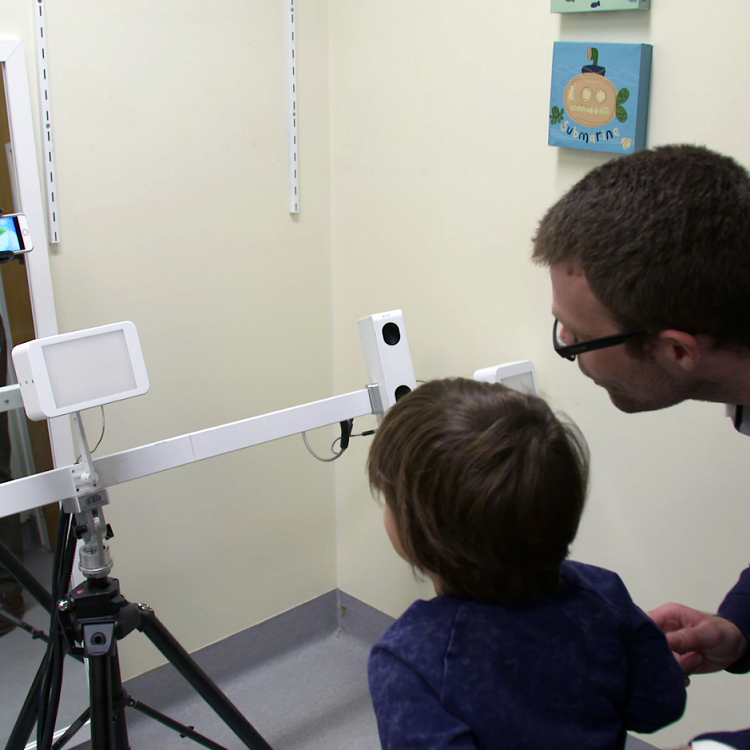
A new study led by The Kids Research Institute Australia has found a link between masculine facial features and autism.