
Search
The National Institute for Clinical Excellence updated guidance for continuous glucose monitoring (CGM) in 2022, recommending that CGM be available to all people living with type 1 diabetes. Manufacturers can trade in the UK with Conformité Européenne (CE) marking without an initial national assessment. The regulatory process for CGM CE marking, in contrast to the Food and Drug Administration (FDA) and Australian Therapeutic Goods Administration (TGA) process, is described.
One third of Australian children diagnosed with type 1 diabetes present with life-threatening diabetic ketoacidosis (DKA) at diagnosis. Screening for early-stage, presymptomatic type 1 diabetes, with ongoing follow-up, can substantially reduce this risk (<5% risk). Several screening models are being trialled internationally, without consensus on the optimal approach. This pilot study aims to assess three models for a routine, population-wide screening programme in Australia.
The evidence about the acceptability and effectiveness of innovative paediatric models of care for Type 1 diabetes is limited. To address this gap, we synthesised literature on implemented models of care, model components, outcomes, and determinants of implementation and sustainability.
The ESCALATION system is a novel paediatric Early Warning System that incorporates family involvement and sepsis recognition. This study aimed to assess the feasibility and iteratively refine the ESCALATION system in a variety of hospital settings in preparation for full-service implementation.
To assess relationships between continuous glucose monitoring (CGM) time in range (TIR), 70-180 mg/dL, time below range (TBR), <70 mg/dL, time above range (TAR), >180 mg/dL, and glucose coefficient of variation (CV) in relation to currently recommended clinical CGM targets for older people, which recommend reduced TIR and TBR targets relative to the general type 1 diabetes population.
A 28-year-old man with congenital hypogonadotropic hypogonadism (CHH) was found to be heterozygous for the GNRH1 p.R31C mutation, reported in the literature as pathogenic and dominant. The same mutation was found in his son at birth, but the testing of the infant at 64 days confirmed the hormonal changes associated with minipuberty.
In Australia, access to insulin pump therapy for children with type 1 diabetes is predominantly restricted to families with private health insurance. In an attempt to improve equity, additional subsidised pathways exist which provide pumps to families with reduced financial resources. We aimed to describe the outcomes and experiences of families with children commenced on pumps through these subsidised pathways in Western Australia.
Autoantibodies to pancreatic islet antigens identify young children at high risk of type 1 diabetes. On a background of genetic susceptibility, islet autoimmunity is thought to be driven by environmental factors, of which enteric viruses are prime candidates.
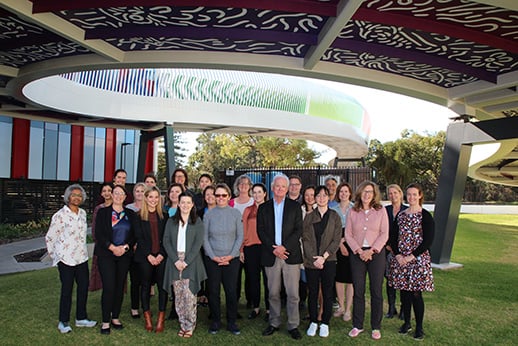
See an overview of the people involved in the Children's Diabetes Centre, including co-directors, research focus area leads, research staff and students