
Search
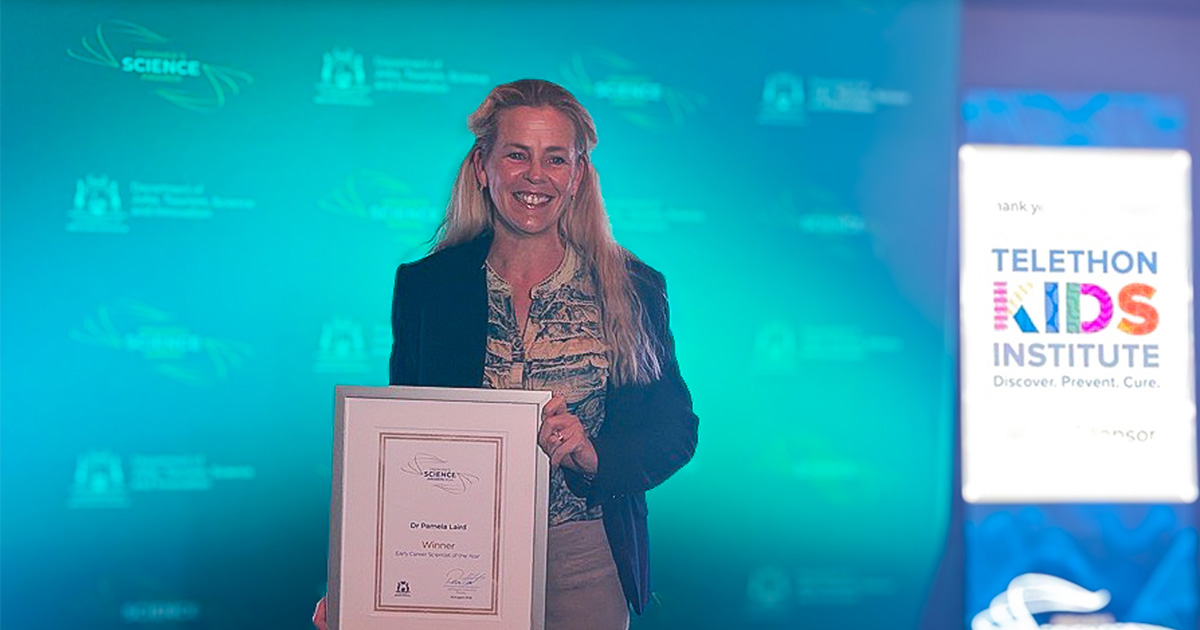
Congratulations to respiratory health researcher and clinician Dr Pam Laird, who was last night named joint winner of Early Career Scientist of the Year at the 2024 Premier’s Science Awards.

A promising new treatment pioneered in Western Australia for people with cystic fibrosis has commenced testing in a clinical trial in the United States and Australia.

Culturally secure intervention to facilitate medical follow up for Aboriginal children, after being hospitalised with chest infections, have proven to improve long-term lung health outcomes.

A public health campaign to raise awareness about the dangers of chronic wet cough in Aboriginal children is helping to improve detection, diagnosis and management of the condition.

COMBAT CF is one of two long-standing international trials which have resulted in new early intervention options helping to reduce progressive lung damage in kids living with CF.
Electronic cigarettes (e-cigarettes) have become a leading form of nicotine use among children and adolescents worldwide. The World Health Organization (WHO) estimates that approximately 15 million young teenagers currently use these products. Contrary to early claims regarding reduced harm, e‑cigarettes expose users to a range of toxic substances, including carcinogens and, increasingly, synthetic nicotine compounds and other psychoactive agents.
E-cigarettes are widely perceived as a safer alternative to tobacco, and that perception often extends to their use around infants and children. Yet exhaled aerosol deposits onto indoor surfaces, leaving a residue, known as third-hand e-cigarette aerosol, that can be re-emitted, ingested, or absorbed through the skin. The developmental consequences of such exposure have been almost entirely unexplored.
Protracted bacterial bronchitis (PBB), chronic suppurative lung disease (CSLD) and bronchiectasis are parts of a disease spectrum characterised by chronic wet cough (CWC). Untreated PBB can develop into CSLD/bronchiectasis.
Plastic pyrolysis oil, which can be produced with similar properties as diesel fuel (plastic diesel), can be used as an alternative to mineral diesel (ULSD) to run a diesel engine. This presents a potential method for recycling waste plastic. Typically plastic diesel is blended with mineral diesel, and oxygenated fuel additives such as ethers added to improve resulting fuel properties.
Existing trajectory studies have emphasised large-airway indices, but chronic obstructive pulmonary disease (COPD) might originate in smaller airways. This study aimed to investigate mid-to-small-airway function trajectories, their associated factors, and COPD risk.