
Search
Caregiver-mediated supports in general have shown mixed evidence for enhancing language outcomes in infants at higher likelihood of autism. While caregivers play a substantial role in caregiver-mediated supports, little is known about whether caregivers' own subclinical autistic features - known as broader autism phenotype - may moderate infant language outcomes.
Eye-tracking could expedite autism identification/diagnosis through standardisation and objectivity. We tested whether Gazefinder autism assessment, with Classification Algorithm derived from gaze fixation durations, would have good accuracy (area under the curve [AUC] ≥ 0.80) to differentiate 2-4-year-old autistic from non-autistic children.
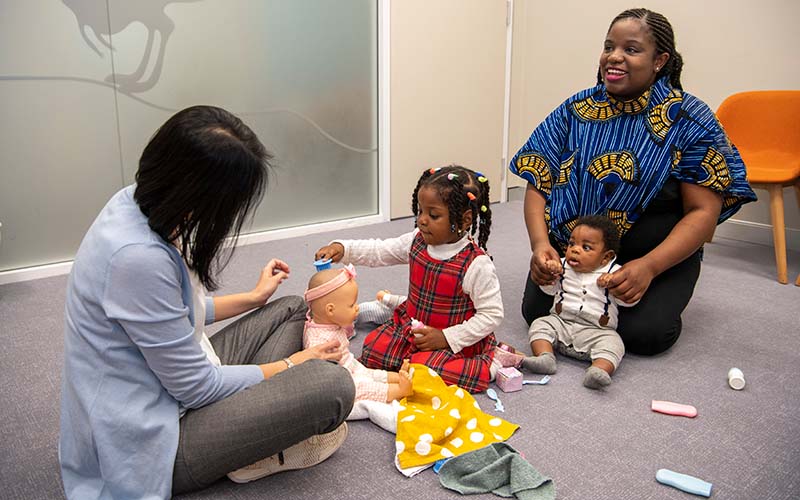
The Kids' autism research takes place at CliniKids, a centre that integrates world-class research with a clinical service for children with developmental delay and/or autism and their families.
Approximately 8% of all children experience developmental and mental health conditions. Similarities in characteristics across neurodevelopmental conditions-such as difficulties in communication and language, social interaction, motor coordination, attention, activity regulation, behavior, mood, and sleep-make it challenging to attribute these characteristics exclusively to specific diagnoses and assessments. The purpose of this study was to identify symptomatic domains across neurodevelopmental conditions in children and to explore dimension reduction for transdiagnostic assessment.
Alexithymia—a trait characterized by difficulties in emotion processing—is of high interest in the autism field. However, the lack of validated alexithymia measures for autistic individuals limits progress. This study aimed to address this gap by examining the psychometric properties of the Perth Alexithymia Questionnaire (PAQ) across autistic and non-autistic samples. Using the PAQ, we investigated how alexithymia manifests in autistic individuals and its links with poor mental health outcomes (anxiety).
This study aimed to understand how parents describe the most challenging behaviors exhibited by their children diagnosed with autism and/or ADHD, how those behaviours impact their family, and whether challenges are directly related to the core characteristics of these conditions.
Autism spectrum disorder (ASD), a neurodevelopmental condition characterised by social and communication differences, is complex and aetiologically heterogeneous. Untargeted metabolomics is emerging as a tool in screening for biochemical abnormalities. This research was conducted using the Australian Autism Biobank resource and involved analysis of plasma metabolites to characterise metabolite differences between autistic children and controls.
The placebo effect is established in clinical trials, but for paediatric research, questions remain about how to best manage its influence. Within the autism field, data on these issues is sparse. This is particularly important in the oxytocin field where placebo responses are thought to play an important role. This study reports on data from the single-blind, placebo lead-in phase of a randomised controlled trial to investigate the placebo response and its relationship to treatment response in autistic children.
Autistic children demonstrate an increased likelihood of self-injurious behaviours (SIB). To support autistic individuals who exhibit SIB and understand the factors that contribute to SIB, we examined several child and family characteristics associated with the severity of SIB.
This study aimed to identify guiding principles to underpin assessment and diagnosis of autism to improve the quality, consistency and accuracy of services provided to individuals and their families. An online survey and focus groups were used to capture community perspectives of members of the Australian autistic and autism communities.