
Search
We compared early vocal development in children "at risk" for cerebral palsy (CP) with typically developing (TD) infants aged 6 to 15 months using the SAEVD-R, investigating potential pre-linguistic markers of communication impairment. Additionally, we sought to examine the agreement between the SAEVD-R and IMP, which uses parent report, in identifying departure from typical vocal development in at-risk infants.
The EQ-5D-5L is a generic health utility instrument for measuring health-related quality of life (HRQoL), with self-report and proxy report versions for children (EQ-5D-Y-5L). Children with intellectual disability (ID) are a heterogeneous population whose impairments and comorbidities place them at risk of poor HRQoL. This study aimed to describe the content validity and suitability for children with ID of a proxy report version of the EQ-5D-Y-5L as seen by their caregivers.
Children with cerebral palsy (CP) participate less in physical activities and have increased sedentary behaviour compared with typically developing peers. Participate CP is a participation-focused therapy intervention for children with CP with demonstrated efficacy in a phase II randomised controlled trial (RCT) to increase perceived performance of physical activity participation goals. This study will test the effectiveness of Participate CP in a multisite phase III RCT.
Fidgety movements occur in infants between the age of 9 to 20 weeks post-term, and their absence are a strong indicator that an infant has cerebral palsy. Prechtl's General Movement Assessment method evaluates whether an infant has fidgety movements, but requires a trained expert to conduct it. Timely evaluation facilitates early interventions, and thus computer-based methods have been developed to aid domain experts.
For children with cerebral palsy (CP), who are marginally ambulant, gross motor capacity peaks between 6 and 7 years of age with a subsequent clinical decline, impacting their ability to engage in physical activity. Active Strides-CP is a novel package of physiotherapy targeting body functions, activity and participation outcomes for children with bilateral CP. This study will compare Active Strides-CP to usual care in a multisite randomised waitlist-controlled trial.
We investigate the construct validity, test re-test reliability, and responsiveness of the Wrist Position Sense Test (WPST) for children with hemiplegic cerebral palsy (CP).
To investigate the effects of providing rigid wrist-hand orthoses plus usual multidisciplinary care, on reducing hand impairments in children with cerebral palsy.
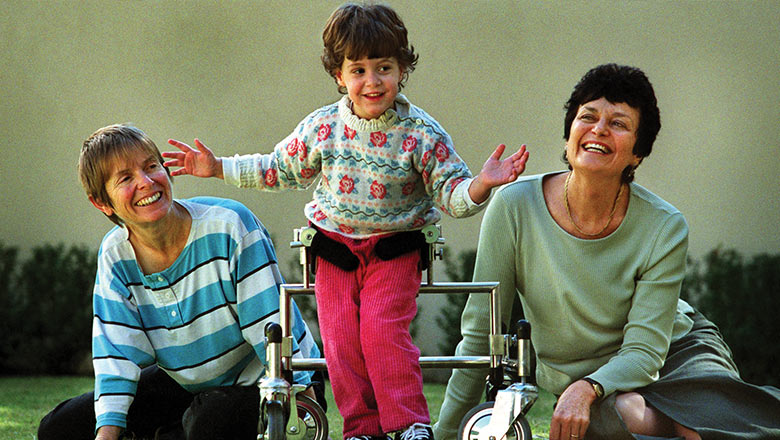
Cerebral palsy is not only the result of birth trauma and the lack of oxygen supply during delivery.
A non-progressive motor disability due to damage of the developing brain, this is the most common physical disability in childhood. Affecting about one in 500 babies, it is frequently accompanied by other neurological impairments, such as intellectual or sensory.
The aim of RESP-ACT is to reduce these children’s respiratory hospital admissions and visits to Emergency Department, and to help them and their families to have as the best possible quality of life.