
Search
Protecting your privacy is important to us. This policy explains how The Kids Research Institute Australia collects, uses, and safeguards your personal information.
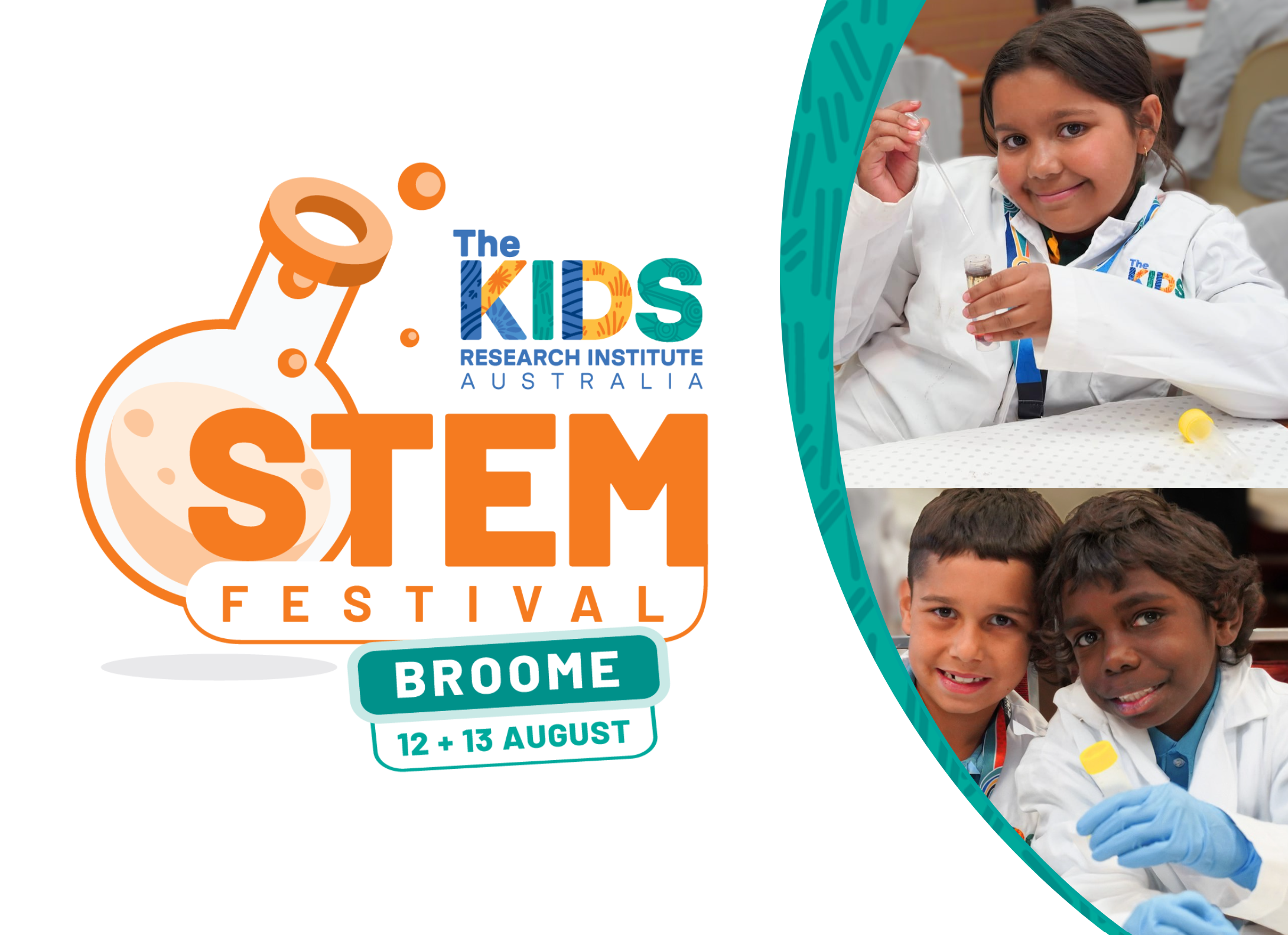
Register now and experience an awesome adventure into the world of Science, Technology, Engineering and Mathematics this August!

Embark on a linguistic journey with KalyaKoorl’s tailor-made Noongar Language Programs.
Our vision for reconciliation is a future where Aboriginal and Torres Strait Islander children and families experience equity in health, wellbeing and opportunity – empowered by partnerships grounded in respect, collaboration, and benefit.
This study investigated whether the timing of birth of the younger siblings was associated with the risk of the older siblings’ developmental vulnerability in early childhood.
Primary ciliary dyskinesia (PCD) is a rare, progressive, inherited ciliopathic disorder, which is incurable and frequently complicated by the development of bronchiectasis. There are few randomised controlled trials (RCTs) involving children and adults with PCD and thus evidence of efficacy for interventions are usually extrapolated from people with cystic fibrosis.
o update and extend a previous cross-sectional international comparison of glycaemic control in people with type 1 diabetes. Methods: Data were obtained for 520,392 children and adults with type 1 diabetes from 17 population and five clinic-based data sources in countries or regions between 2016 and 2020.
We hypothesised that adolescents with type 1 diabetes with a urinary albumin/creatinine ratio (ACR) in the upper tertile of the normal range (high ACR) are at greater risk of three-step diabetic retinopathy progression (3DR) independent of glycaemic control.
Protracted international conflict has seen escalating numbers of displaced and resettled Syrian and Iraqi refugees, raising concerns for their health and well-being. This paper describes the demographic and clinical profiles of recently resettled Syrian and Iraqi refugee children and adolescents across physical, psychosocial, developmental and educational domains using standardised multidisciplinary assessments.