
Search

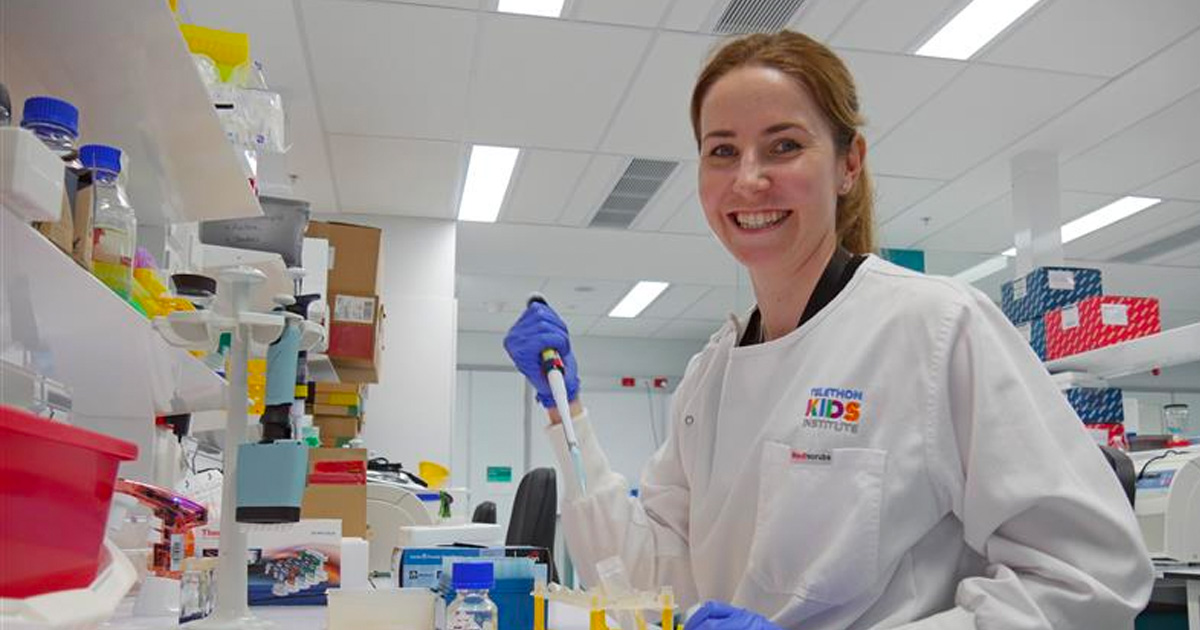
Two The Kids Research Institute Australia researchers have been awarded prestigious grants from the Raine Medical Research Foundation for projects in childhood cancer and newborn infection control.
WA researchers hope to gain new insights into the way immune cells in the body trigger attacks of multiple sclerosis (MS), thanks to new funding from MS Australia.
Previous research has shown that immune development during the first week of life, i.e. ontogeny, is progressive, consistent and robust, involving large numbers of differentially expressed genes at each sampled time point.
Protection of newborns from infection can be achieved through maternal or vaccine-induced antibodies, but the factors influencing vaccine protection (correlate of protection) and subsequent infant immunity remain insufficiently understood. Further investigation is essential to optimize early-life vaccination strategies.
Enteroviruses (EVs) have long been implicated in the development of islet autoimmunity (IA) and type 1 diabetes. However, given the ubiquity of EV infections in children, disease susceptibility is likely driven by host-specific immune responses rather than viral exposure alone.
Allergic diseases are rising worldwide, especially in childhood, and their clinical diversity increasingly exposes the limits of traditional phenotype-based classifications. Genetic susceptibility, environmental exposures, epithelial barrier biology, and immune pathways interact to shape highly variable disease trajectories and treatment responses. In this context, precision medicine is no longer only an aspirational concept, but a practical effort to define meaningful endotypes, identify clinically useful biomarkers, and connect biological insight to prevention and care.
The first peanut oral immunotherapy (OIT) for children was approved by the US Food and Drug Administration (FDA) in 2020. While clinical efficacy is established, evidence on cost-effectiveness-whether the benefits outweigh the costs and adverse effects-remains limited. A variant of OIT, known as probiotic and peanut OIT (PPOIT), has shown similar efficacy in trials.
During winter months of temperate regions, concurrent epidemics of multiple respiratory pathogens can occur, causing periods of increased clinical burden. Case time series, which are predominantly used to monitor infection levels, can exhibit substantial noise and day-of-the-week effects, limiting the visual interpretation of trends in raw data.
In the austral summer of 2021-2022, Australia experienced an unprecedented Japanese encephalitis virus (JEV) outbreak, with detections over 3000 km south of previous occurrences. Given the limited knowledge of JEV transmission ecology in Australia, we developed geospatial models of transmission risk to support the public health response. We created time-varying habitat suitability models for suspected mosquito vectors and ardeid hosts using month-scaled occurrence and covariate data from 2000-2023.
Human milk is a rich source of immunomodulatory factors that influence the development of the infant immune system, including susceptibility to allergic diseases. Among these components, milk antibodies have been extensively studied for their role in protecting against infections; however, their potential contribution to allergy prevention may be equally important. The mechanisms of protection include allergen exclusion, enhanced and targeted antigen presentation, immune modulation via shaping of the infant gut microbiome, and direct regulation of gut immune responses.