
Search
Many approved oral paediatric medicines continue to have poor taste acceptance, suggesting that the ingredient blends employed in these medicines are not adequately effective in taste-masking drugs with strongly aversive tastes. To address this inadequacy, this narrative review provides a comparative evaluation of taste-masking ingredients used by the pharmaceutical industry with those employed in the food industry, as well as food items used by caregivers to mask the unpalatable taste of medicines for young children.
Findings provide evidence for a strong association in the development of sleep problems and difficulties of dysregulation with emotion, cognition, and aggression
Aboriginal children and children from lower socio-economic backgrounds were over-represented with OM-related hospitalizations but had fewer TTIs
Bevacizumab is well tolerated and appears most effective for rapid tumor control to preserve vision and improve morbidity
We argue that the principles and practice of narrative medicine can be applied on a larger scale, one with planetary health in mind

A consortium of partners across the WA medical research sector will develop and deliver the State’s first digital health-specific program.
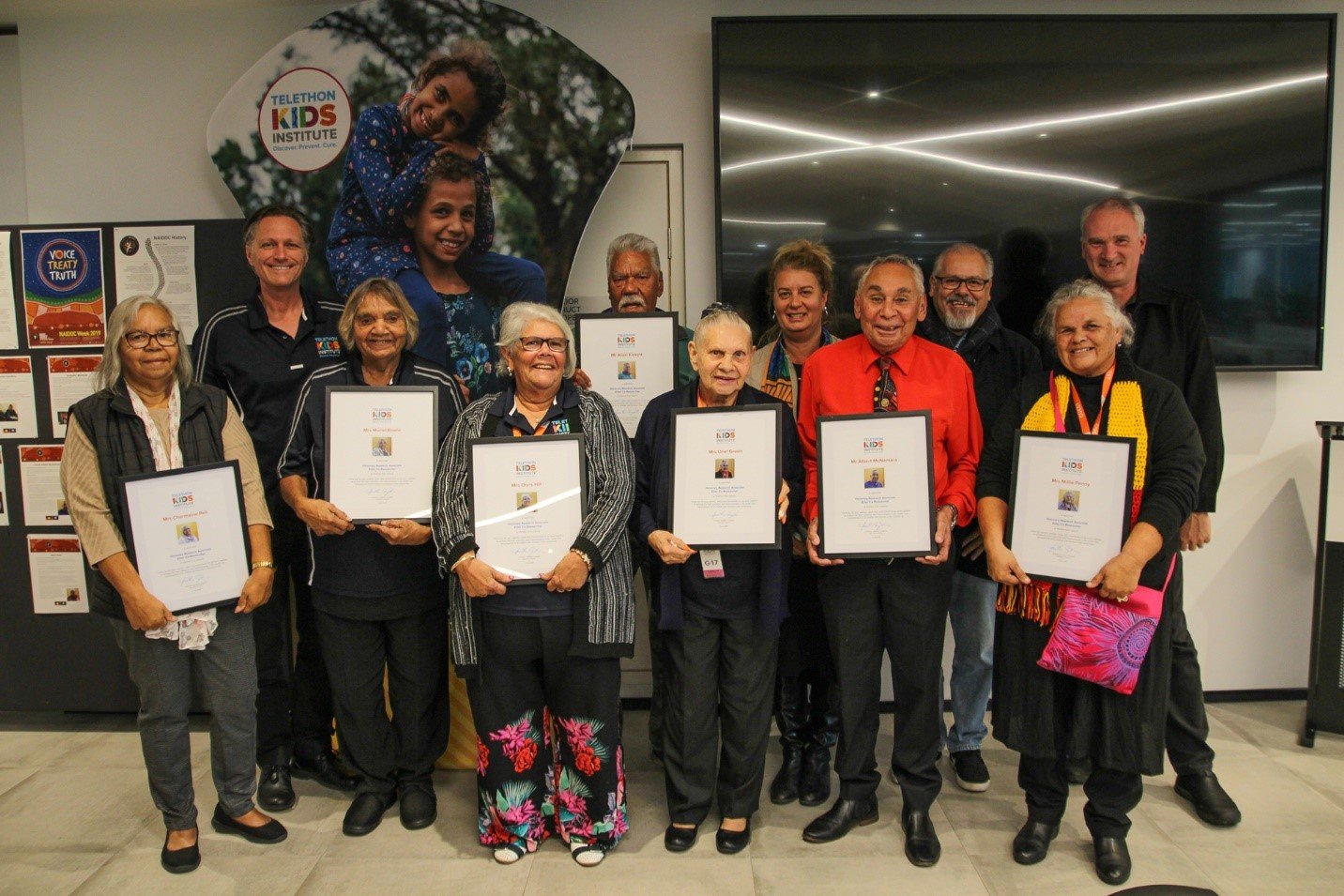
Executive Director Jonathan Carapetis said he was honoured to be able to work with the Elders in creating a bridge between the Institute’s research and the lives of Aboriginal children and families.
Our findings suggest that utilization of IL-7 by cTFH cells affects production of IgG2 antibodies to PPV23 antigens in some HIV patients
People living in new developments, and low SES areas of Perth, may be disadvantaged with poorer access to healthy food and greater exposure to unhealthy food outlets
We found no statistically significant association between processed red meat density and risk of a first clinical diagnosis of central nervous system demyelination