
Search
The aim was to assess the feasibility of assessing diet with an image-based mobile food record application in 51 adolescents and young adults with Down syndrome.
High fractional exhaled nitric oxide and sputum eosinophils are associated with an increased risk of future virus-induced exacerbations.

The Children’s Diabetes Centre at The Kids Research Institute Australia is leading the longest and largest at-home trial of a hybrid closed-loop insulin pump system.
The Kids Research Institute Australia researchers will have continued access to the latest equipment to support and enable their important research, thanks to Maia Financial.
A range of specially branded stationery has been created as part of an exciting new partnership between The Kids Research Institute Australia and Staples.

From ensuring exceptional insurance protection to holding fundraising events, JLT has the interests of The Kids Research Institute Australia well covered.
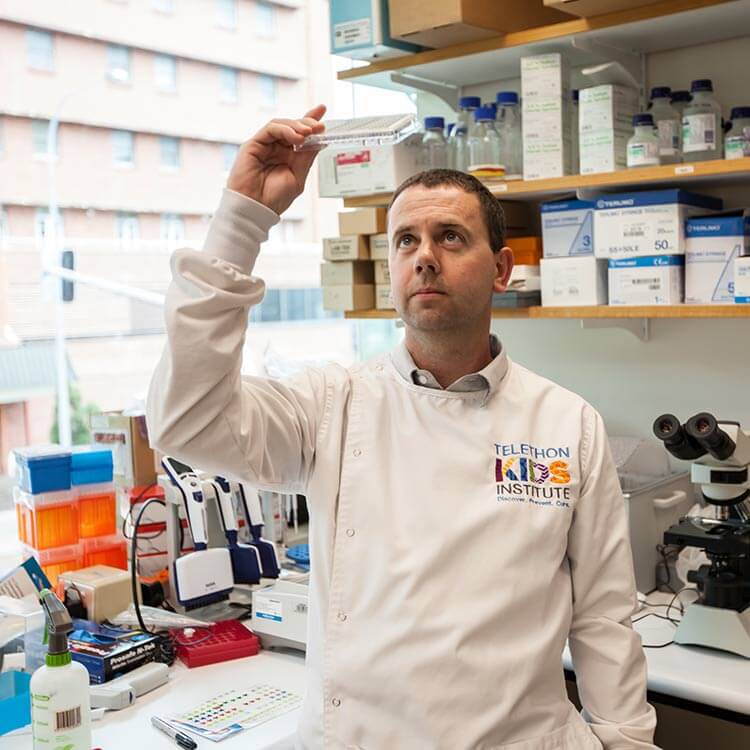
A The Kids Research Institute Australia researcher will investigate new ways to harness the body’s own immune system to fight melanoma, thanks to Cancer Council WA funding.
This study provides the first clear evidence of a reduction over time in the behavioral severity of individuals diagnosed with Autistic Disorder during a period of stability in diagnostic criteria

New research from Perth’s The Kids Research Institute Australia shows that babies born premature continue to have lung problems well into childhood.
Investigate whether impairments in the ability to execute flexible goal-directed actions may be an underlying feature in ASD contributing to these symptoms